Discover Wroclaw
Wroclaw doesn't announce itself. It doesn't have Krakow's medieval perfection or Warsaw's big-city energy. What it has is something harder to define — a lived-in authenticity, a food scene that's quietly excellent, and a scale that makes exploration feel effortless.
Why Wroclaw?
Poland's fourth-largest city has spent decades in the shadow of its more famous siblings. But that's changing. Over the past ten years, Wroclaw has developed one of Poland's most interesting food scenes — not through hype or tourism, but through chefs and restaurateurs who live here, work here, and care about what they serve.
The result is a city where you can eat remarkably well without trying very hard. Where a Tuesday night dinner at a neighborhood spot can be as memorable as a special-occasion meal. Where natural wine bars coexist with traditional milk bars, and neither feels out of place.
Part of it comes down to geography and history. Wroclaw sits on over a dozen islands formed by the Odra river and its tributaries, connected by more than 100 bridges — more than any other city in Poland, and enough to rival Amsterdam. That water gives the city its character: the islands, the boulevards along the riverbanks, the way every walk seems to cross another bridge you haven't noticed before. It shapes the neighborhoods and creates pockets of the city that feel genuinely distinct from each other.
"Wroclaw is the kind of city where you come for a weekend and start wondering if you could live here. The food is a big part of that."
Neighborhoods to Know
Old Town (Stare Miasto)
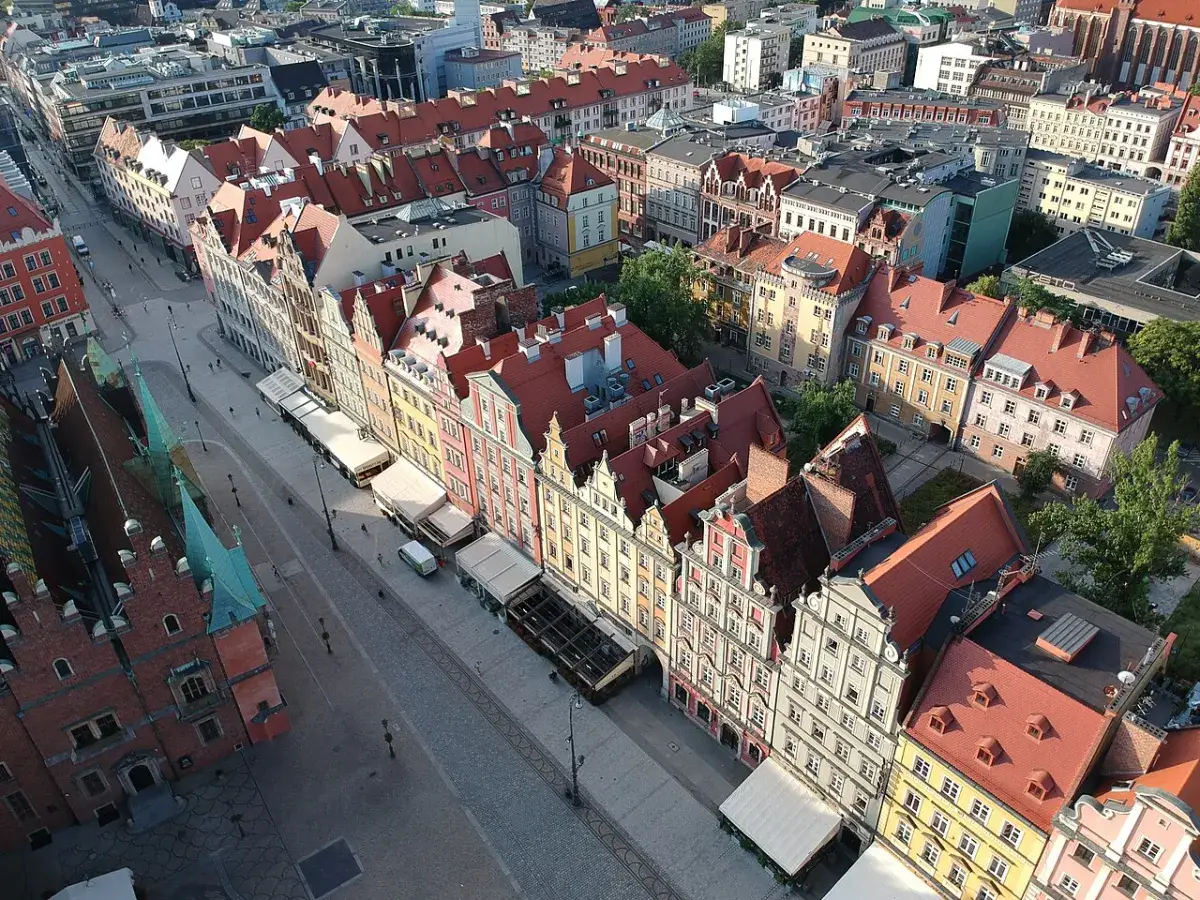
The historic center, rebuilt after WWII, is where most visitors start. The Market Square (Rynek) is one of Europe's largest — a vast rectangle of colorful townhouses, each facade different from its neighbor, with the ornate Old Town Hall anchoring the center. It's a space that feels grand without being intimidating. During summer it fills with outdoor seating; in winter, it becomes the heart of the Christmas market.
The food scene around the Rynek is mixed. The restaurants lining the square itself tend toward tourist pricing, though a few are genuinely good. The real finds are on the side streets — walk one block in any direction and the prices drop while the quality often rises. This is also where you'll find several of Wroclaw's best wine bars, including the century-old cellar at Pod Gryfami.
Four Denominations District (Czterech Świątyń)
South of the Old Town, this neighborhood gets its name from the four churches (Catholic, Orthodox, Protestant, Jewish) that stand within a few hundred meters of each other — a testament to Wroclaw's historic religious tolerance. It's quieter than the center, with tree-lined streets, art nouveau buildings, and some of the city's best restaurants tucked into residential blocks. If you're staying for more than a weekend, this is where you want to be — the balance of walkability, character, and quality food is ideal.
Nadodrze
Across the river from the Old Town, Nadodrze has transformed from industrial wasteland to creative hub over the past decade. Street art covers building facades, independent cafes occupy former workshops, and some of the city's most interesting food spots have opened in converted industrial spaces. It still feels rough around the edges — some buildings are derelict, the streets are grittier — which is part of the appeal. This is where Wroclaw's younger, creative crowd eats and drinks, and where you'll find the most experimental cooking.
Ostrów Tumski
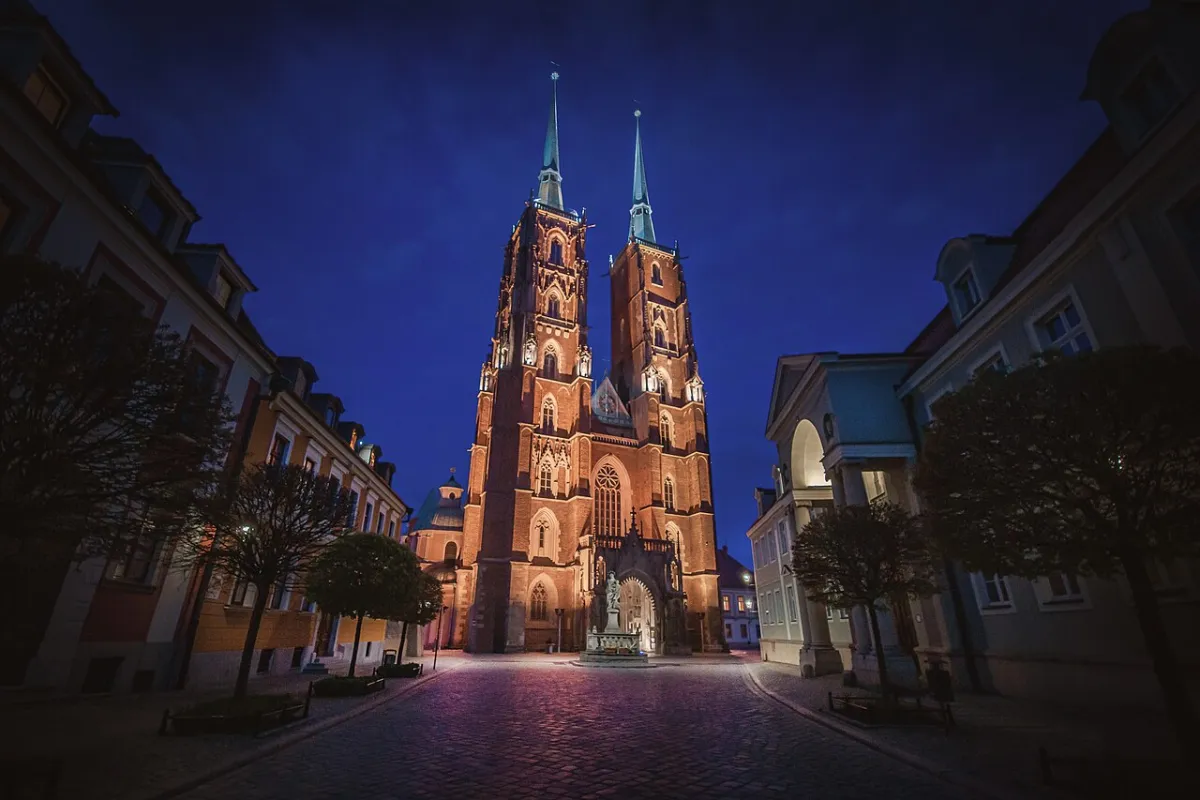
Cathedral Island is where Wroclaw began — the city's oldest district, settled over a thousand years ago. Today it's a calm, leafy enclave of churches and cobblestone lanes on the opposite bank from the Old Town. What makes it truly special is the lighting: Ostrów Tumski is one of the last places in Europe still illuminated by gas lamps. Every evening, a lamplighter makes his rounds with a long pole, igniting each lamp by hand. It's not a tourist performance — it's just how this part of the city works.
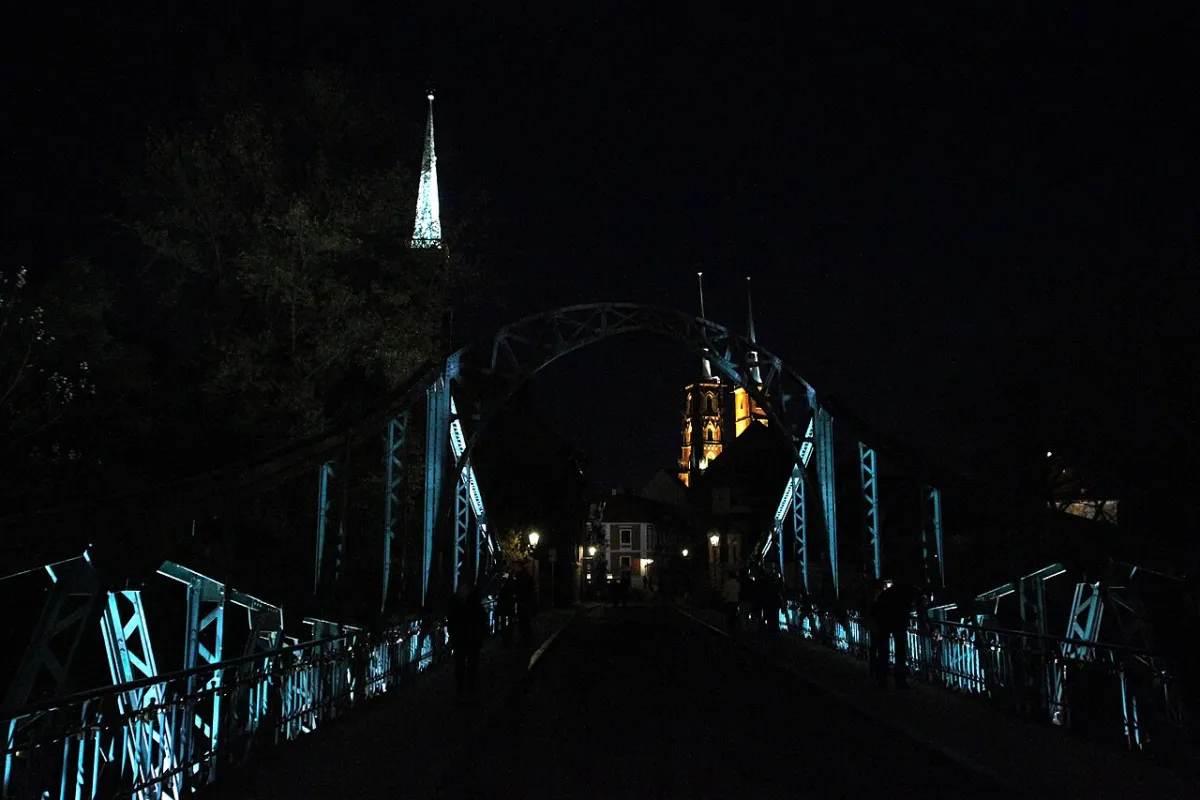
After dark, the effect is quietly stunning. The warm, flickering gaslight against the Gothic spires of the Cathedral of St. John the Baptist creates an atmosphere that's hard to find anywhere else in modern Europe. It's the kind of place where you end up walking slowly without meaning to. If you're having dinner nearby, build in time for a post-meal stroll here — it changes the whole evening.
Grunwald & Popowice
Residential neighborhoods west of the center where locals actually live and eat. Fewer tourists, lower prices, and some hidden gems if you know where to look. Grunwald has a few excellent neighborhood restaurants that rarely appear in tourist guides — the kind of places where the menu is in Polish and the regulars greet each other by name. If you're here for more than a few days, exploring these areas gives you a more honest picture of how the city actually eats.
Getting Around
On Foot
Wroclaw's center is compact and walkable — significantly more so than Warsaw or even Krakow. You can cross the Old Town in 20 minutes. Most of the restaurants in this guide are within a 30-minute walk of the Market Square, and the walk itself is half the fun: you cross bridges, pass through parks, and stumble across dwarf statues you hadn't noticed before. Comfortable shoes are essential — the cobblestones in the Old Town are charming but unforgiving.
Public Transport
Trams and buses cover the city well. A 24-hour ticket costs 15 PLN (about €3.50). Buy tickets at machines (cash or card) or via the Jakdojade app. Validate your ticket immediately after boarding.
Taxis & Rideshare
Uber and Bolt both operate in Wroclaw. Rides are cheap — expect to pay 15-30 PLN (€3.50-7) for most trips within the center. Traditional taxis are also reliable and similarly priced.
Bikes
Wroclaw has an excellent bike-sharing system (Wrocławski Rower Miejski) with stations throughout the city. The city is mostly flat and has decent bike infrastructure. A day pass costs 10 PLN.
When to Visit
| Season | Weather | Pros | Cons |
|---|---|---|---|
| Spring (Apr-Jun) | 10-20°C | Pleasant weather, fewer tourists, outdoor seating opens | Occasional rain |
| Summer (Jul-Aug) | 20-30°C | Long days, festivals, river beaches | More tourists, some restaurants closed for holidays |
| Autumn (Sep-Oct) | 10-18°C | Beautiful foliage, harvest menus, fewer crowds | Shorter days, cooler evenings |
| Winter (Nov-Mar) | -5 to 5°C | Christmas markets, cozy interiors, lowest prices | Cold, dark by 4pm, some outdoor spots closed |
Each season brings something genuinely different. In spring, the boulevards along the Odra come alive — locals reclaim the riverbanks, cafes spill outdoors, and the parks shake off winter in a way that feels almost theatrical. Summer turns the city into an outdoor living room: river cruises, rooftop bars, food festivals, and long evenings where the sun doesn't set until almost ten. It's the season for eating outside, and Wroclaw does outdoor dining well.
Autumn might be the best-kept secret. The parks — especially Szczytnicki Park and the Japanese Garden — turn gold and rust, and the restaurant scene shifts into harvest mode. Seasonal menus start featuring wild mushrooms, game, root vegetables, and the kind of hearty cooking that makes you glad the temperature dropped. Fewer tourists means easier reservations at the best spots.
Winter is polarizing. It's cold, it gets dark early, and the city empties out compared to summer. But Wroclaw's Christmas market — centered on the Rynek and drawing over 700,000 visitors annually — is one of Poland's finest and among the best-regarded in Central Europe. Mulled wine (grzaniec), wooden stalls selling regional crafts and smoked cheeses, and the lit-up townhouses make the Old Town feel like a different place entirely. The market runs from mid-November through late December. Beyond the market, winter is when restaurants are at their coziest: think candlelight, rich stews, game meats, and big red wines by the fire. Booking is easier too — the Bib Gourmand restaurants that require weeks' notice in summer often have weeknight availability in January and February.
Practical Tips
Language
English is widely spoken in restaurants, bars, and tourist areas — particularly since the tech boom brought thousands of international workers to the city. In neighborhood spots and milk bars, you might encounter Polish-only menus, but staff will usually help with gestures and goodwill. Learning a few phrases — "dziękuję" (thank you), "proszę" (please), "rachunek" (bill), "smacznego" (bon appétit) — goes a long way and is always appreciated.
Currency
Poland uses the Polish Zloty (PLN), not the Euro. 1 EUR ≈ 4.3 PLN, 1 GBP ≈ 5.1 PLN. Cards are accepted almost everywhere — even market stalls and small cafes usually take contactless payments. Still, carry some cash for tips (many card machines don't have a tip option) and for the occasional holdout that's cash-only.
Opening Hours
Restaurants typically serve lunch 12:00-15:00 and dinner 18:00-22:00. Many close one day a week (usually Monday). Sunday openings are increasingly common but not universal.
Reservations
Book ahead for popular spots, especially on weekends. The Bib Gourmand restaurants (Nawa, JaDka, SFera) now fill up a week or more in advance. Pijalni Wino & Bistro is similarly popular. Many restaurants use Reservio or similar systems; some only take phone reservations. When in doubt, call — or walk in on a weeknight, when even popular places often have tables.
Getting Here
Wroclaw Copernicus Airport (WRO) has direct flights from most major European cities, including London, Munich, Frankfurt, Stockholm, and Copenhagen. Budget carriers like Ryanair and Wizz Air keep fares competitive. From the airport, a taxi to the center costs about 50 PLN (15-20 minutes), or take bus 106 for about 5 PLN. If you're coming from Krakow, the train takes 3 hours and costs around 50 PLN — a pleasant ride through the Polish countryside.
What Makes Wroclaw Special
It's not any one thing. It's the combination of a rich food culture, reasonable prices, and a scale that makes everything feel accessible. It's the way a Tuesday night at a neighborhood wine bar can feel as special as a Saturday splurge. It's the chefs who are cooking for locals, not tourists.
The Bronze Dwarfs
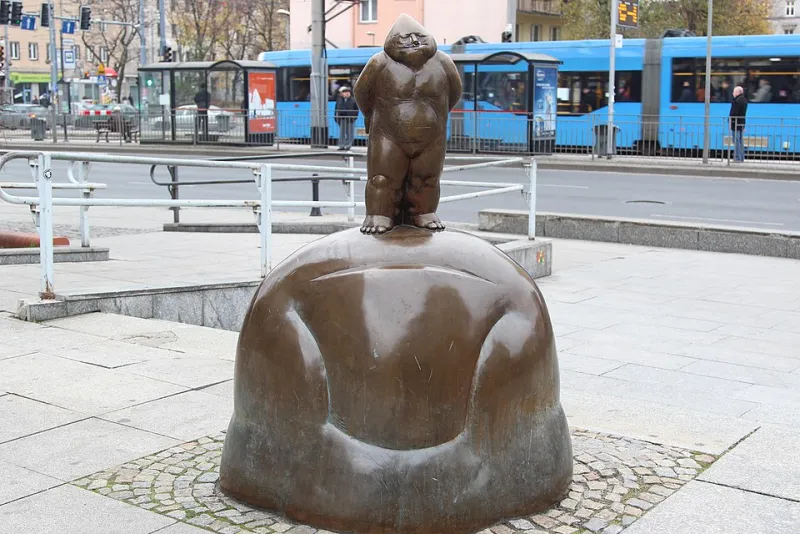
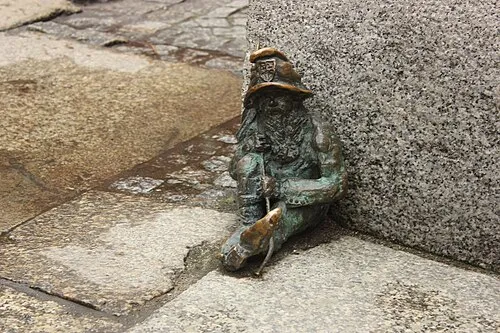
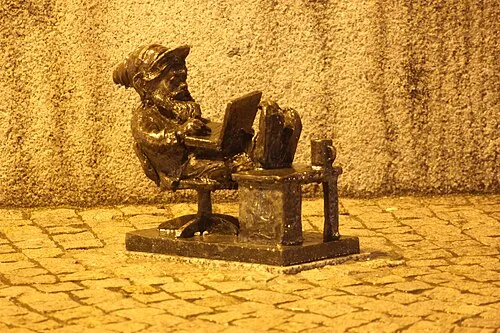
Over 300 bronze dwarfs are hidden throughout Wroclaw's streets. Photos: Wikimedia Commons, CC BY-SA
You'll notice them within an hour of arriving — small bronze statues, no taller than your shin, tucked into doorways, perched on windowsills, peering out from behind lampposts. There are over 300 of them scattered across the city, and spotting them becomes an involuntary habit.
The origin story is better than any guidebook version suggests. In the 1980s, Wroclaw was home to the Orange Alternative, an anti-communist resistance movement that used absurdist street art as protest. They painted dwarfs on walls to cover up spots where authorities had scrubbed away anti-government graffiti. The logic was disarming: you can't arrest someone for drawing a dwarf. The movement grew into surreal public happenings — thousands marching dressed as elves, handing out free toilet paper — that made the regime look ridiculous rather than fearsome.
After communism fell, the city kept the spirit alive by commissioning bronze dwarf statues from local artists. Each one has a personality and a name. There's a dwarf pushing a tiny Sisyphean boulder, one sleeping under a blanket, one riding a snail, one doing laundry. New ones appear every year, commissioned by businesses, institutions, and sometimes private citizens. Hunting for them has become one of Wroclaw's most beloved activities — there are maps, dedicated apps, and an informal completionist subculture. Children love it, adults find themselves involuntarily scanning every doorway and windowsill. It started as genuine political resistance and became the city's most charming feature. That trajectory — protest to playfulness, subversion to civic pride — tells you a lot about Wroclaw.
A City Built on Resilience
The Wroclaw you see today is, in many ways, a reconstruction. During the final months of World War II, the city — then the German city of Breslau — was declared a fortress (Festung Breslau) and became one of the last German strongholds to fall. The siege lasted from February to May 1945. By the time it ended, somewhere between 70% and 90% of the city center had been destroyed.
What happened next is one of the more remarkable stories in European urban history. Under the postwar border changes, Breslau became the Polish city Wroclaw. Its new inhabitants were largely settlers from Lwów (now Lviv, Ukraine), a city that had been culturally Polish for centuries and was itself being absorbed into the Soviet Union. They brought their own traditions, their own recipes, their own way of living — and grafted it onto the bones of a German city.
This explains something about Wroclaw that you feel but might not immediately understand: it's a city without a single, dominant cultural identity. It's not purely Silesian, not purely Polish, not German, not quite anything you can pin down. That blend — the layered history, the rebuilt architecture, the transplanted traditions — gives it a flexibility and openness that newer or more homogeneous cities often lack. To understand how this history shaped what people eat here, see our guide to Wroclaw's food traditions.
European Capital of Culture 2016
For years, Wroclaw was the Polish city that most Poles loved but most foreigners had never heard of. The 2016 European Capital of Culture designation changed that — not overnight, but decisively. The city used the year as a catalyst: new cultural venues opened, public spaces were renovated, and international media suddenly had a reason to write about a place they'd been ignoring.
The infrastructure investments outlasted the title. The National Forum of Music, completed for the Capital of Culture year, is now one of the best concert halls in Central Europe. The African Museum (Muzeum Afryki) expanded. Public art installations became permanent fixtures throughout the city center. A new generation of cultural entrepreneurs — gallery owners, festival organizers, independent publishers — settled here, drawn by lower costs and creative energy.
More importantly, the designation put Wroclaw on the mental map for international visitors who might otherwise have gone straight to Krakow or Warsaw. German tourists, in particular, have rediscovered the city they once knew as Breslau — many come to explore family history alongside the dining scene. Visitor numbers have climbed steadily since, reaching 6.6 million in 2024, and the food and wine scene has grown in step with that demand. The restaurants that opened to serve this growing, internationally-minded audience are the ones you'll find throughout this guide.
Centennial Hall (Hala Stulecia)
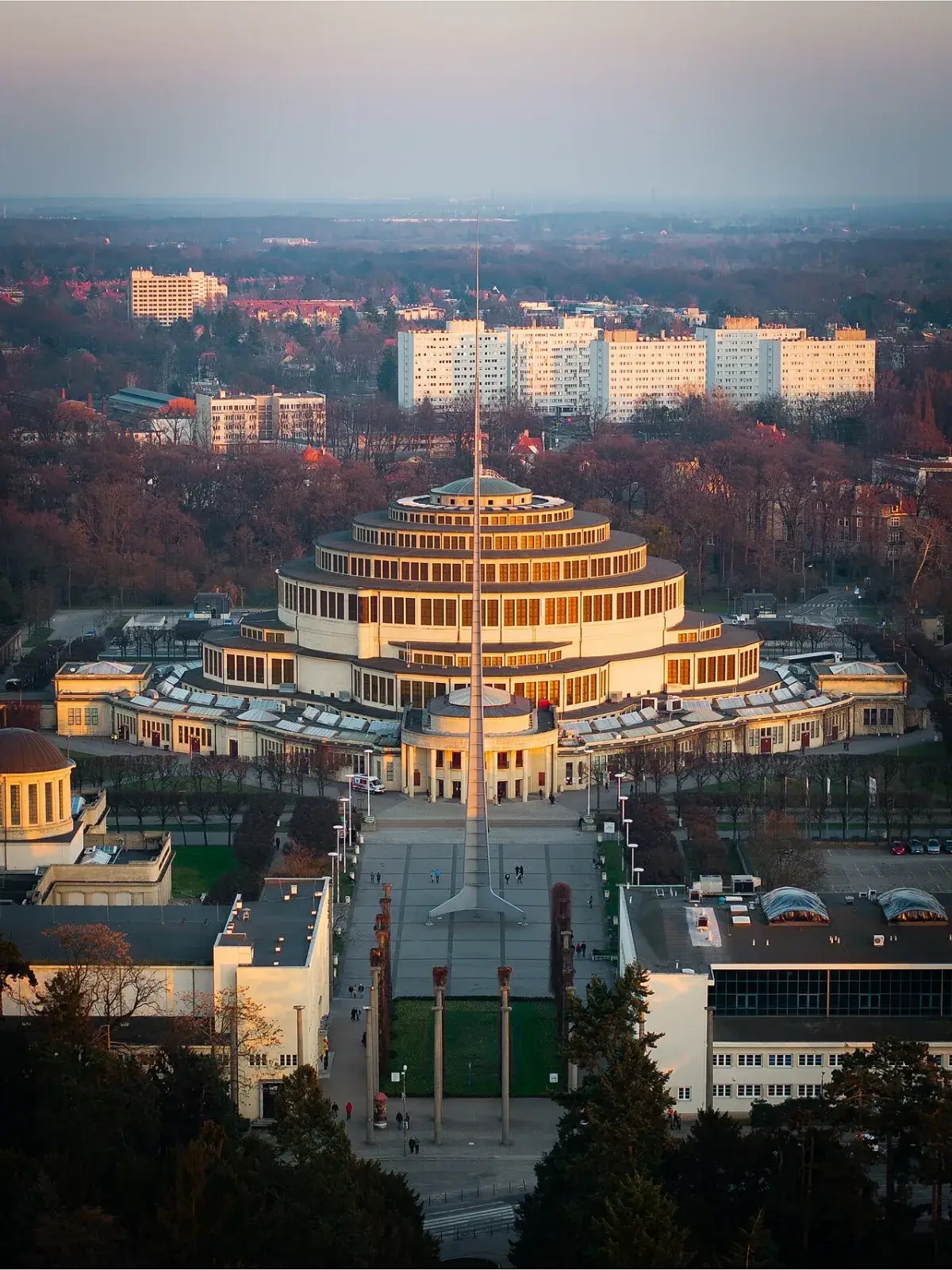
Wroclaw's one UNESCO World Heritage Site is easy to miss if nobody tells you about it. Centennial Hall, built in 1913 when the city was still Breslau, is a massive reinforced concrete dome that was an engineering marvel of its era — the largest of its kind when completed. Architect Max Berg designed it to celebrate the centenary of Napoleon's defeat, and the structure influenced a generation of modernist architects across Europe.
Today it hosts concerts, exhibitions, and events — from international music festivals to trade fairs. The surrounding park complex includes a beautiful colonnaded pergola, a multimedia fountain that puts on light shows in summer (the largest in Poland), and Szczytnicki Park, which contains a serene Japanese Garden first laid out in 1913 and painstakingly restored in 1996. It's a 20-minute tram ride from the center, and while it's not a food destination, it's worth the trip — especially on a sunny afternoon, and especially if you pair it with dinner at one of the restaurants along the way back into town.
An International Business Hub
One thing that puzzles visitors is how a mid-sized Polish city supports such a sophisticated dining scene. The answer is partly economic. Over the past two decades, Wroclaw has become a major tech and business center. Google, IBM, HP, Credit Suisse, and dozens of other international companies have offices here, drawn by the university talent pipeline and lower costs than Western Europe.
This has created a large, well-paid, internationally-minded workforce — people who've lived in London, Berlin, or Stockholm and brought their dining expectations with them. They want good natural wine on a Wednesday. They want seasonal menus and competent service. They're willing to pay for quality but won't accept inflated tourist prices. This audience — demanding but fair — has pushed the restaurant scene to a level that pure tourism alone couldn't sustain. It's the reason Wroclaw's food scene punches well above what you'd expect for a city this size.
The university adds another layer. Wroclaw has one of Poland's largest student populations — over 130,000 — which keeps the cheap eats scene thriving and ensures a constant flow of young, curious diners who'll try the new place that just opened in Nadodrze. The combination of tech money at the top, student energy at the bottom, and a growing middle class of food-conscious locals in between creates the kind of diverse dining ecosystem that most cities twice this size struggle to support.
Wroclaw doesn't try to impress you. It just feeds you well. And that's enough.